
ILO Staff

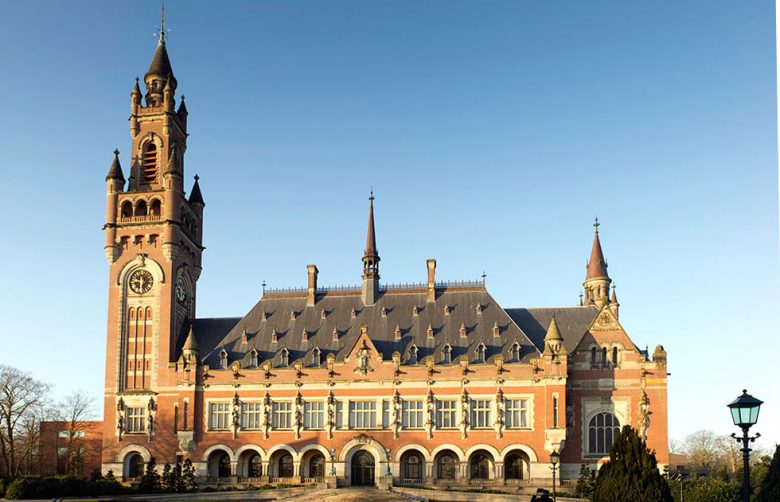
Ukraine institutes proceedings against the Russian Federation and requests International Court of Justice to indicate provisional measures

Unless you have opted to live in a cave (which to be clear we have nothing against considering the insane world we are living in), you are already following the news of Russia’s invasion of Ukraine (or so-called special military operation as Russia puts it!). There is of course a lot to discuss and have an opinion on what has been happening between the two countries for the purpose of which there are far more eligible people but, in this News & Analysis we are having a look at Ukraine’s latest legal actions before the International Court of Justice (“ICJ” or “Court”) which is the principal judicial organ of the United Nations.

Read More

Basic Explanation of Two Important Clauses in a Term Loan Agreement

The Basics of Conditions Precedent Clause

The conditions precedent (“CP”) are conditions to be fulfilled before the lender releases the loan to the borrower. Such conditions may be applicable at the time of first drawdown or any future drawdowns during the loan agreement. This clause provides a mechanism for the lender to ascertain the existence of certain documentary and non-documentary (factual) circumstances before giving out the loan. The lender, employing CP clause, tries to safeguard the fund it is going to put at risk. If there is no CP clause, the bank will be obliged to give out the loan. In this case, the bank will be defenseless unless the borrower commits a default.[1]

Read More

Defence Rights of Accused: Legal Basis

Among the most evident rights of an accused person in all judicial systems, the accused’s defence rights stand at the top. As one of the fundamental principles of fair trial, it is envisaged in national laws including Criminal Procedure Code as well as the Law on Respect for Legitimate Freedom and Protection of Citizen’s rights (ratified in May 2004) which provides that “The courts and prosecution offices are obliged to observe the accused’s rights and provide them with the opportunity to take lawyers and experts.”

Read More

THE GLANCE ON LETTER OF CREDITS

Documentary credit transactions around the world are in compliance with international practices which has been developed by the International Chamber of Commerce (ICC). Fortunately, with due attention to the revision of the Uniform Customs and Practice for Documentary Credits (UCP), there is an opportunity for merchants as a valuable resource at international level for doing businesses.

Read More

NEW AMENDMENTS ON CHEQUE’S ISSUANCE REGULATION

It is important to cite that the “the new amendment with regards to an issuance of cheque regulation” had been ratified by Iranian Parliament on Nov. 04, 2018 while currently the Central Bank as a pioneer bureau is at the stage of the execution of this amendment related to issuance, circulation and receipt of all types of cheques.

Read More

Iran and China Judicial Ties: The ongoing process

Iran, likewise any other states within the international community has been entered into numerous bilateral treaties in terms of judicial matters in order to pave the path of legal and judicial collaboration and facilitate the enforcement of rule of law with other states with due respect to sovereignty and mutual interest; among which is the treaty signed between Iran and China which has been enacted as the law by the Iranian Parliament on 18 October 2016 under the name “The Law of Judicial Assistance in relation to Civil and Commercial Matters between Islamic Republic of Iran and People’s Republic of China” (hereinafter referred to as “The Judicial Assistance Law”/ “JAL”).

Read More

Report on the Iranian Intellectual Property Law: Protection of Trademarks

The legal basis of the trademark protection in Iran is the new Intellectual Property Law “Iran Patents, Industrial Designs and Trademarks Registration Act”, in force since May 2008 and the respective executive By-Laws. In addition, Iran is a contracting party to the Paris Convention, Madrid Agreement and the Madrid Protocol and adopted the related rules and regulations.

Read More